
Let’s Talk About SSRIs (Yes, Really)
By Dr. Maribel “Bella” Khoury, MD
Board-Certified Family Physician | Integrative & Mindful Medicine Approach
Published March 14, 2026
Let’s start with something that still surprises people when I say it out loud:
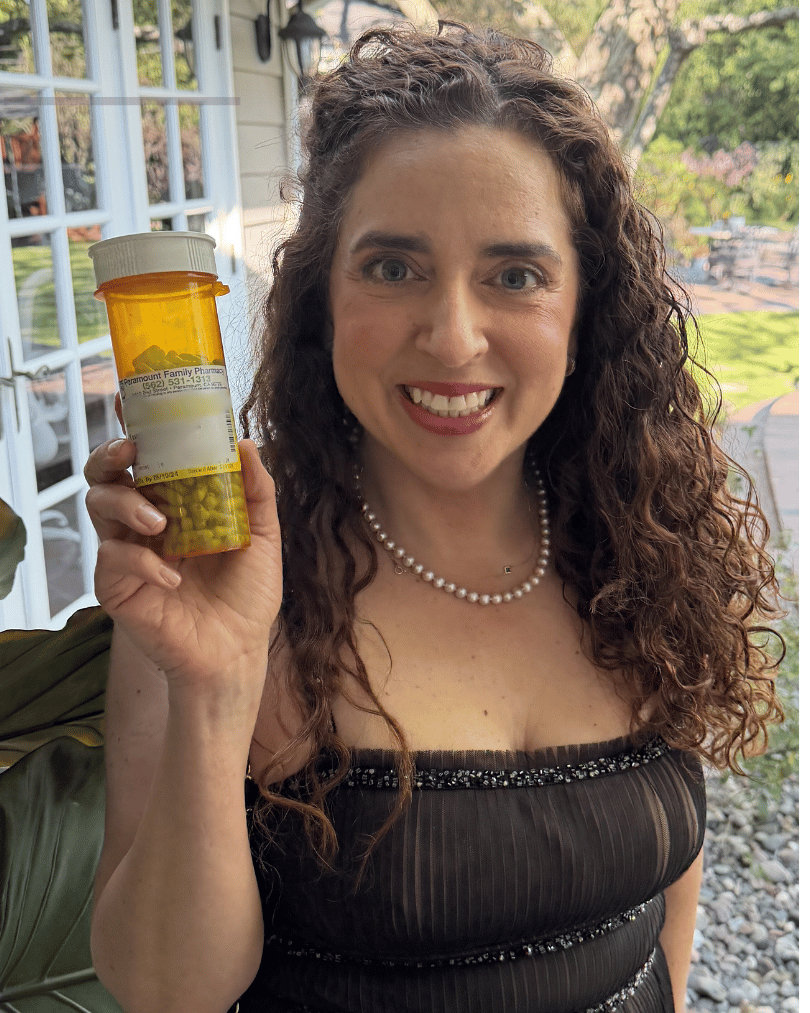
I take an SSRI.
There. I said it.
For some people, that sentence lands with relief. For others, it raises eyebrows. Occasionally, someone looks at me as if I just confessed that I secretly eat ice cream for breakfast every morning.
(Side note: I don’t. But I do believe ice cream has its place in the world.)
The truth is, despite all the progress we’ve made in understanding mental health, there is still a quiet taboo around medications like SSRIs. We talk freely about cholesterol medication, insulin, blood pressure pills—but when it comes to medications that support our emotional well-being, the conversation often gets awkward.
People whisper.
They apologize.
They worry about what others will think.
As a physician, I’ve heard every version of this hesitation.
And as a human being… I understand it deeply.
A Doctor Who Is Also Human
Doctors are often expected to project calm, resilience, and certainty at all times. There’s an unspoken assumption that we somehow exist outside the messy realities of human experience.
But the truth is that physicians live in those same realities.
In my case, I live with multiple sclerosis (MS)—a chronic neurological condition that brings its own uncertainties, physical challenges, and moments of vulnerability. Living with MS has been one of the greatest teachers in my life, though I will admit it was not a lesson I signed up for enthusiastically.
Along the way, I have also experienced anxiety, moments of insecurity, and the emotional complexity that often accompanies chronic illness.
And like many people, I tried to navigate those experiences with the tools I encourage others to use:
- mindfulness
- reflection
- therapy
- support from loved ones
All of these helped. Truly.
But eventually I realized something important.
Sometimes, the most compassionate thing we can do for ourselves is allow another tool into the toolbox.
For me, that included an SSRI.
The Myth That Medication Means Weakness
One of the most persistent myths about antidepressants is that taking them somehow means you’ve failed to “handle things on your own.”
This belief is not only inaccurate—it can be harmful.
SSRIs are among the most well-studied medications in modern psychiatry. For many people, they help regulate mood and reduce anxiety by supporting the brain’s natural neurochemical balance.
In simpler terms, they can help turn down the volume on the constant background noise of anxiety or emotional overwhelm.
That doesn’t mean medication fixes everything.
It doesn’t replace therapy.
It doesn’t replace reflection.
It doesn’t replace meaningful life changes.
But sometimes it creates the mental space necessary for those deeper healing processes to actually happen.
Think of it less as a crutch and more as adjusting the lighting in the room so you can finally see clearly.
Vulnerability Is Not a Character Flaw
Part of my own healing journey has involved something that medicine doesn’t always encourage enough:
vulnerability.
Admitting we need help—whether through therapy, medication, community, or simply honest conversations—is not a weakness.
In fact, it often takes far more courage to say “I need support” than it does to pretend everything is fine.
Over time, I’ve come to see vulnerability not as something to hide, but as something that connects us to each other.
When people learn that their doctor has also navigated anxiety or uncertainty, something shifts in the room.
The distance disappears.
Suddenly, the conversation becomes more human.
And healing tends to happen in very human spaces.
Healing Is Rarely One Thing
My approach to medicine has always centered on whole-person care.
Health is shaped by biology, yes—but also by relationships, meaning, life experiences, stress, and the stories we carry about ourselves.
For many people, healing emerges from a combination of:
- psychotherapy and emotional processing
- mindfulness and nervous system regulation
- supportive relationships
- lifestyle changes
- spiritual or philosophical reflection
- and sometimes, medication
There is no single formula.
And that’s okay.
The goal isn’t perfection.
The goal is balance, resilience, and a sense of steadiness in the face of life’s inevitable challenges.
Breaking the Silence
If sharing my own experience helps reduce even a small piece of the stigma surrounding mental health treatment, then the vulnerability is worth it.
Taking an SSRI did not make me less capable as a physician.
If anything, it made me more compassionate, more understanding, and more aware of how complex healing really is.
So if you or someone you care about has ever felt hesitant or embarrassed about seeking support for mental health—including medication—I hope this offers a small reminder:
You are not alone.
And needing help does not make you weak.
Sometimes it simply means you’re human.
About the Author
Dr. Maribel “Bella” Khoury, MD is a board-certified family medicine physician with over 25 years of experience and a fellowship in psychiatry. She practices through Maribel P. Khoury, MD, A Medical Corporation, where her work focuses on whole-person care and what she often describes as a mindful medicine approach—integrating evidence-based medical care with mindfulness, resilience, and attention to the lived human experience.
Disclaimer
This article is intended for educational and informational purposes only and reflects personal reflections from the author. It does not constitute medical advice, diagnosis, or treatment. Individuals should consult their own qualified healthcare professional regarding medical or mental health concerns.
Dr. Maribel P. Khoury provides medical care through her independent practice, Maribel P. Khoury MD, A Medical Corporation. The views expressed here are her own and do not represent medical services provided through Monarchs Therapy.