
By Judith A. Verduzco, LCSW — Therapist & Founder of Monarchs Therapy
Published November 1, 2025
Music has always been part of my life—the background hum of long drives, lazy Sundays, cleaning days, BBQs, and those quiet moments when you just need to feel. Or dance it off, for that matter.
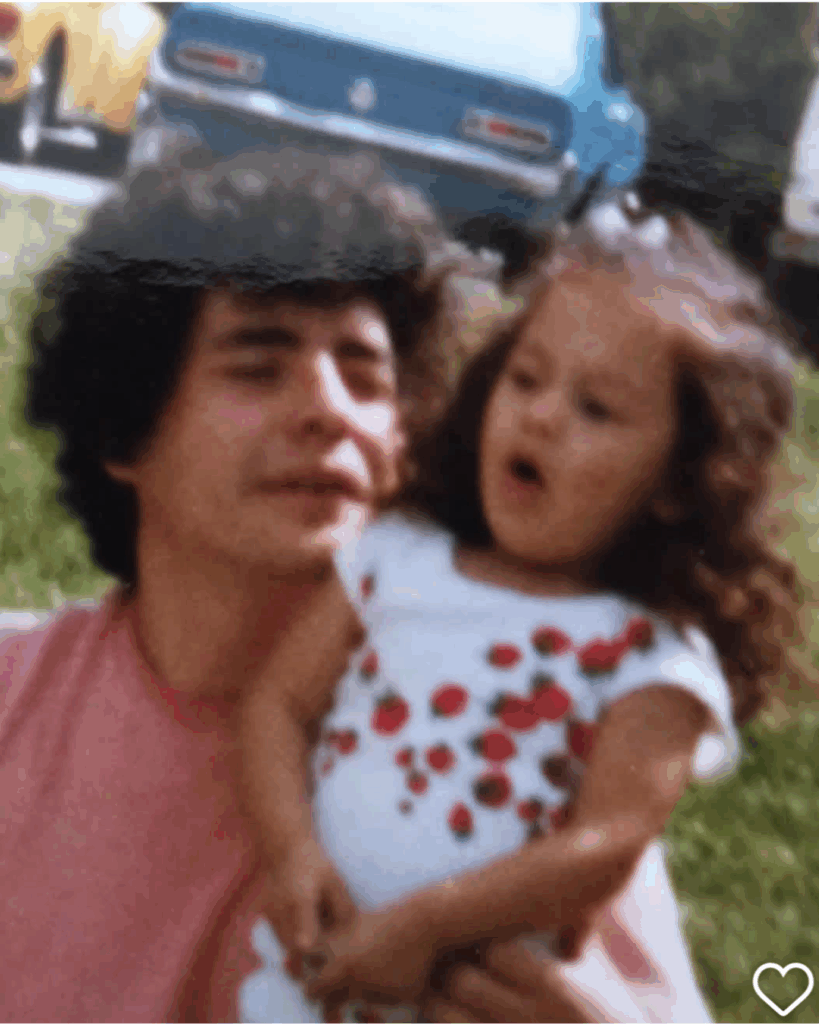
I grew up with a dad who loved music—all kinds of music. He was an immigrant from Mexico who came to the U.S. with nothing but a dream. He had a difficult upbringing—raised in an orphanage and carrying the heavy burden of unspoken trauma. Even so, he pursued an education—the equivalent of a CPA in Mexico—and worked for a major bank (a big deal back in those days). Life was complicated, and with a baby on the way (hi, it’s me), he did what many families did in those days and set his sights on the American Dream.
Coming here wasn’t easy. There were long days, hard choices, and a lot of unknowns. His past traumas eventually caught up to him and showed up in some of his closest relationships. But somehow, he always made room for music and wove it into our lives. Looking back, I think music was his escape—his way to cope, to breathe, to belong.
Some of my favorite memories are of sitting in his car with my little brother, windows rolled down, listening to The Beatles, The Commodores, Roy Orbison, The Doors, Pink Floyd, Roberto Carlos, Vicente Fernández, and so much more. His taste was all over the map (in the best way), and it opened my ears and heart to different sounds and stories. In many ways, music was also his bridge to assimilation—a gentle way of learning and appreciating a new culture while holding onto his own.
Eventually, I found my own sound. (Totally dating myself here.) I still remember recording songs with my best friend on a cassette deck—our own “mixtapes” before playlists were a thing. We loved Paula Abdul, Janet Jackson, Madonna, Wilson Phillips, and all the ‘90s anthems that defined my teens—before eventually immersing myself in my Mexican roots through rancheras and bandas. But the deeper love? That came from my dad.
Because of him, I learned to appreciate almost everything—classic rock, oldies (I still love oldies, by the way), blues, pop, Latin, Brazilian rhythms, even classical. Now I can find beauty in nearly any genre and language, and I’m forever grateful.
When Grief Finds Its Melody 💛
When my dad passed away during the height of COVID, I was in shock. Despite some ongoing health issues, he was fairly healthy, strong, and still so young. I didn’t get to say goodbye in person—like so many other families separated by hospital walls and pandemic restrictions during that time.
I remember going for a drive soon after finding out about his passing—just to get away—and suddenly “I Will Always Love You” (the Dolly Parton version) came on the radio. In that moment, I felt him. As if he were speaking to me directly through the music: “Se le quiere mucho, mija, siempre.”
There are songs that bring him right back: the opening chords of “Imagine,” a blues riff that sounds like what he used to whistle while teaching me how to change the car oil (at age nine, no less), or a Roberto Carlos track that makes my eyes sting with tears. These moments can catch me off guard, but more often than not, I feel warmth—like he’s in the passenger seat again, tapping the steering wheel and saying, “I’m here, mija.”
Music has an incredible power to hold both joy and sorrow at once. It lets us grieve and heal in the same breath—and I see that same magic in my clients, too.
Science backs what so many of us already know in our bones: listening to meaningful music can calm the body’s stress response and activate brain regions tied to memory and emotion—like the hippocampus and amygdala—helping us process what we feel (Gustavson et al., 2021; Bowling, 2023).
Healing Through Sound 🎵
Grief doesn’t always show up as tears. Sometimes it’s a song you suddenly can’t skip, a lyric that lands exactly where it hurts, a melody that time-travels you back to someone you love.
In grief therapy, we often draw from the concept of “continuing bonds”—the understanding that healing doesn’t mean letting go of someone you love, but finding new, meaningful ways to stay connected (Klass, Silverman, & Nickman, 1996).
When I support clients through loss, I remind them: you don’t have to “let go” to heal. Healing isn’t forgetting—it’s learning how to stay connected in a new way.
Here are gentle practices you can try:
- Create a Memory Playlist.
Gather songs your loved one adored or tracks that capture their spirit and your favorite moments together. - Let the Lyrics Speak.
When a line moves you, write it down. Journal about why it resonates right now. - Move With It.
Sway, dance, hum, tap your foot—let your body help the feelings move through instead of getting stuck. - Listen With Intention.
Light a candle, close your eyes, and play that one song. Picture their smile. Let yourself feel the connection.
A Love Letter in Every Note
I still talk to my dad through music. When I’m driving and a song comes on that he’d love, I smile and say, “This one’s for you, Papá Jaime.”
Music keeps us connected—to those we’ve lost, to our memories, and to the parts of ourselves they helped shape. Love doesn’t disappear when someone is gone; it just changes instruments.
So when a song stops me in my tracks, I let it. I listen. I breathe. I remember. Because sometimes, healing sounds like a guitar solo, a familiar chorus, or a quiet hum that feels like home.
Therapist’s Reflection
Healing isn’t linear—it’s rhythmic.
It ebbs and flows, quiets and crescendos.
Research on post-traumatic growth shows that meaning-making and connection—through art, writing, or music—can foster long-term adaptation and resilience after loss (Tedeschi & Calhoun, 2004).
If you’re grieving, ask yourself what connects you to love and memory. Maybe it’s music. Maybe it’s art. Maybe it’s cooking their favorite meal. Healing isn’t about moving on; it’s about learning how to carry love forward.
If this resonates with you, and you’d like support navigating grief, loss, or emotional healing, I’d be honored to walk alongside you.
🎶 Schedule a session with Monarchs Therapy
References
Bowling, D. L. (2023). Biological principles for music and mental health. Translational Psychiatry, 13, Article 374. https://www.nature.com/articles/s41398-023-02671-4
Gustavson, D. E., Coleman, J. R. I., & Smoller, J. W. (2021). Mental health and music engagement: Review and conceptual framework. Translational Psychiatry, 11, Article 632. https://www.nature.com/articles/s41398-021-01483-8
Harvard Health Publishing. (2024, March 15). How music can help you heal. Harvard Medicine Magazine. https://www.health.harvard.edu/mind-and-mood/how-music-can-help-you-heal
Klass, D., Silverman, P. R., & Nickman, S. L. (Eds.). (1996). Continuing bonds: New understandings of grief. Taylor & Francis. https://www.routledge.com/Continuing-Bonds-New-Understandings-of-Grief/Klass-Silverman-Nickman/p/book/9781560323396
Tedeschi, R. G., & Calhoun, L. G. (2004). Posttraumatic growth: Conceptual foundations and empirical evidence. Psychological Inquiry, 15(1), 1–18. https://doi.org/10.1207/s15327965pli1501_01